Tipping your crew: why it matters, and how to do it right
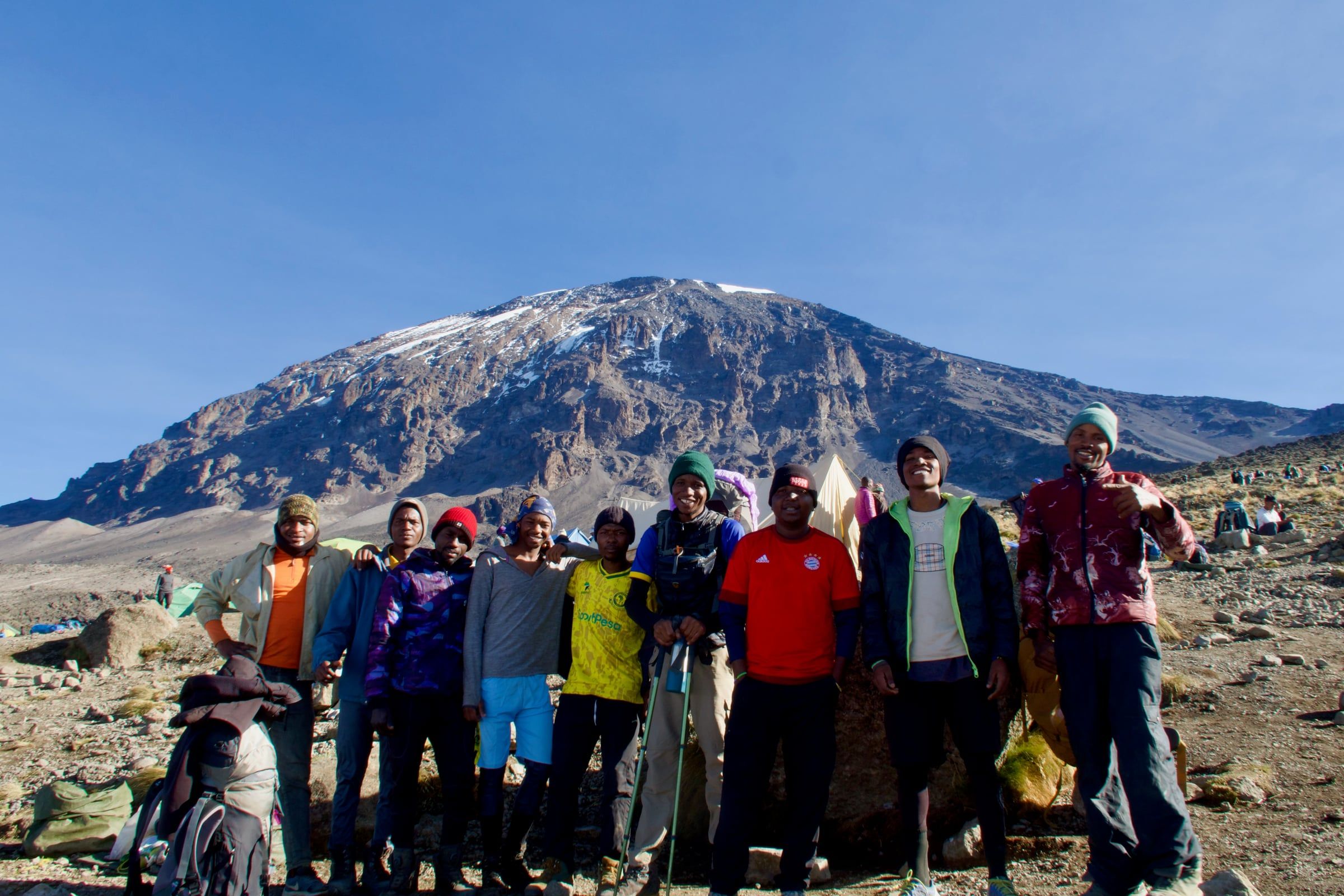
I started on this mountain as a porter in 2012, then worked as a cook before becoming a guide. I know what a fair tip means to the people carrying your bags.
Why tips matter so much
On a typical climb, each climber is supported by a team of porters, a cook, a waiter and guides. Porters carry tents, food, water and your duffel bag. Their loads are weighed at the gate, and they walk ahead every day so that camp is ready when you arrive.
Porter wages are modest and the work is seasonal. For many porters, tips are a large part of what they earn in a year. That money pays school fees, rent and food for their families in the villages around the mountain. A tip is not an extra. It is part of how the whole system works.
How much to budget
These are the amounts I recommend for each crew member, per day. They are for the whole group, not for each climber, so split the total between everyone in your group. But in the end, a tip is something from the heart.
| Crew member | Per day, for the whole group |
|---|---|
| Guide | $25 |
| Assistant guide | $20 |
| Cook | $15–18 |
| Porter (each) | $8–10 |
| Waiter | [NEEDS JOSEPH: amount per day] |
There is no toilet porter on my crews, so there is nobody else to add to the list. We don’t carry portable toilets: there are toilets along the way, and the bush is always there. Bring biodegradable wet wipes or toilet paper.
At the end of the climb I give you a tipping sheet with the name of every crew member. You write each person’s tip next to their name, and sign next to it.
Please leave your tip money at the hotel. Don’t carry tip cash on the mountain. There is nothing to spend it on up there, and it is one more thing to lose or get wet. Lock it in your hotel safe before we leave. After the climb we all drive back to your hotel together, and that is where you hand it over.
Bring cash, the right kind
- Tips are given in cash: US dollars or Tanzanian shillings.
- US notes must be printed in 2009 or later and in good condition. Older or torn notes are hard for the crew to exchange.
- Bring small notes ($5, $10, $20) so you can split amounts fairly.
- There are ATMs in Moshi if you want to withdraw shillings after you arrive.
The tipping ceremony
At the gate, straight after the descent on the last day, the whole crew gathers, usually with singing, to say goodbye. Together we fill in the tipping sheet, and you tell everyone how much each person gets.
Then we all drive back together to your hotel, where you hand over the cash. If you still need to get money, we can go to an ATM first. Put it in one envelope per crew member, with their name and amount written on it, and hand each one over yourself. That way every porter knows what you gave, and gets all of it.
If you prefer to give one total, announce it in front of everyone along with each person’s share. I repeat the amounts in Swahili so the whole crew hears them, and they usually show their thanks in their own way. Only tip the people on your crew list.
If you can’t get cash, you can transfer the money to me instead, and I will draw it and hand it to the crew the next day. But the crew much prefer cash on the day, so please bring it if you can.
Gear you no longer need
Good boots, warm jackets, gloves and headlamps make a real difference for porters. If you’re happy to leave gear behind, give it at the ceremony with your tips. It is always welcome.
Any questions about this? Message me on WhatsApp.
Message Joseph on WhatsApp